
business
Redefining Success by W. Brett Wilson - Book Review
Posted November 16th, 2012 by Gena Rotstein- business
- CSR
- Global Entrepreneurship Week
- innovation
- National Philanthropy Week
- philanthropy
- Redefining Success
- W. Brett Wilson
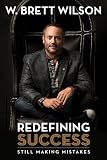 During the course of my career I have had the privilege of meeting and conversing with some of North America’s leading business people, politicians, actors and philanthropists. I know that I am lucky. So when I received an email last month from W. Brett Wilson’s publicist to write a review on his book, Redefining Success: Still Making Mistakes I was intrigued and said yes. I take these opportunities as ways to learn more about what others are doing in the world, but it is also an opportunity to gain professional insights that you don’t often get W. Brett Wilson exposed to.
Read more »
- Gena Rotstein's blog
- 6 comments
Industrialization of Philanthropy - What Role will you Play?
Posted June 12th, 2012 by Gena Rotstein- business
- Calgary Herald
- giving
- industry
- philanthropy
- slow money
- Social Enterprise
- Social Finance
This is a link to my first Calgary Herald blog post in the Business Section.
For some, what I am about to say will send shivers for foreboding down their spines; for others exclamations of Hallelujah. Now, I’m not talking about RIM crawling out of its impending doom, nor am I heralding back to the discovery of Penicillin. I’m talking about a significant social shift that will have ripple effects across the financial services sector and will be re-shaping the way that Canadians interact with organizational systems. I am talking about how we have industrialized our philanthropic sector.
What makes up an industry?
- Standardized practices and formalized structures
- Peer-reviewed publications and academia
- Policies and regulations
- Professional Associations
- Data
To read the rest of this post click here.
- Gena Rotstein's blog
- Add new comment
What if Charities had an Exit Strategy?
Posted April 16th, 2012 by Gena RotsteinThis past weekend I was part of a facilitation team taking a group of individuals and organizations through a course on starting a social enterprise. The workshop was hosted by Canada Bridges and there were about 25 individuals ranging in age, ethnicity, and most especially in the ideas that they felt they could get to market that would make meaningful social change. Read more »
- Gena Rotstein's blog
- Add new comment
Reflections on Failure
Posted December 15th, 2011 by Gena Rotstein- business
- Carol Tavris
- education
- Elliott Aronson
- failure
- family
- JCI
- JCI Calgary
- learning
- Marshmellow Tower
- Milestone Project
- Mistakes Were Made but Not by Me
- Nortel
- RIM
- Robert Fulghum
- SGAYYC
- TED
- TEDx
- The Logic of Failure
- Tom Wujec
Several weeks ago I presented to Calgary's JCI chapter. My presentation was about failure. I started with a TEDx Video where Tom Wujec presents on how building a marshmellow tower leads to team building and creative problem solving.
In Memory of Harley Hotchkiss
Posted June 22nd, 2011 by Gena RotsteinI sat down with Mr. Hotchkiss 3 years ago and interviewed him about his philanthropy. I am re-posting the blog post here today in memory of an extraordinary man who was a committed member of Calgary's community as well as an integral part of Canada's fabric. Read more »
- Gena Rotstein's blog
- Add new comment
5 Global Forces that will Change Charitable Sector
Posted August 1st, 2010 by Gena RotsteinIn a recent article published by McKinsey and Company, "Global Forces: An Introduction," five trends were identified as the new directions for business. These same five trends can be applied to global charity and philanthropy. Read more »
- Gena Rotstein's blog
- 1 comment
G8 Young Business Summit Joint Declaration
Posted July 3rd, 2009 by Gena RotsteinAttached you will find a copy of the G8 Young Business Joint Declaration encouraing our countries' leaders to support, invest and encourage economic growth through the entrepreneurship of young business owners.

- Gena Rotstein's blog
- Add new comment
A Cultural Revolution – How Innovation is Changing the Cultural Exchange
Posted July 3rd, 2009 by Gena Rotstein- Access to new knowledge
- Access to new markets
- Access to new suppliers
- Gena Rotstein's blog
- Add new comment
Bags are Packed (almost...) - G8 Young Business Summit 2009
Posted June 28th, 2009 by Gena Rotstein“What are the innovations we need to re-launch the economy?”
This is the topic of the G8 Young Business Summit that I will be attending this week. Pretty hefty question, and one that is timely in light of the recent vote that happened in the US Congress on the Climate Change Bill. Young entrepreneurs from around the world will be gathering in Stresa, Italy for two-days of workshops, debates, presentations and networking on issues surrounding social innovation and green technology.
- Gena Rotstein's blog
- Add new comment
The Power of Protest
Posted March 17th, 2009 by Gena Rotstein
(Photo provided by Mike Scullen)
I was just at the anti-G.W. Bush rally outside the Telus Convention Centre in Calgary, Alberta.
Here's the image: A line of predominantly white men over the age of 50 with a smattering of women and perhaps a handful of others representing other minority groups in suits wrapped around the Hyatt hotel along Stephen Avenue Mall. Across from them a group of protestors who, in contrast to the well-dress businessmen, looked like a rag-tag bunch. In-between the media, some police on bikes, some cops with cameras and others like myself who are there because we don't support Bush and his former agenda, but we also recognize that our city is built on oil dollars and, right or wrong, it is Bush's policies that made some of our city (read those who were standing in line) very wealthy over the past decade.
So here's my limited take on the whole thing - when you have a legitimate claim that Bush has committed crimes against humanity and then you put up a placard that equates what is happening in Iraq with genocide you water down your argument and make your cause look like a joke. If you want Bush on trial for what he has done and to be held accountable for his actions, make legitimate claims on the poster-board.
One of my favourite signs was one that read, "The Geneva Convention Does Not Apply to the Elite." This passed in front of me when I was standing beside Brett Wilson, CEO of First Energy and member of CBC's the Dragon's Den, standing out from the rest of the suits in his signature jeans and sneakers. There is something to be said about Calgary's elite standing in line to listen to the man who single-handedly ruined the American economy through poor foreign policy and economic decisions and who is going to be sharing his thoughts on where business should be directing their energies over the next few years.
I wonder what these people are going to take out of this presentation, what are they going to apply to their own lives, what are they going to tell their kids when they go home tonight about what they learned from the former leader of the United States?
A friend asked me if I had a ticket (which was selling for $400 each... and they say we are in a recession) would I use it. For sure I would! I want to know what he is saying inside those hallowed halls of the Telus Convention Centre. I especially want to know how the City of Calgary is justifying the expenses that are being put towards Bush's visit. Let's be clear, whether you supported Bush and his administration or not, it is your tax payer dollars that are being sucked up during his visit here.
That's my rant for the day. Back to philanthropy and such next post.





1-866-936-GIVE (4483)
