#RetailPhilanthropy – How Businesses Shake-Up the Charitable Space
Today is #GivingTuesday and charities are out in full-force, cap-in-hand. Place2Give has been a part of GivingTuesday for the past number of years. In fact, one year we lead a Calgary-based initiative along with 10 other organizations including AFP Calgary. I quickly became challenged with this model of fundraising, not because I don’t believe that charities should fundraise, but because this time of year people, while they are thinking of giving, are really focused on buying.
I have spent the day cleaning out my inbox and came across this Harvard Business Review article, "Making Charity Pay" from October 2014. This past Giving Tuesday and, for the past several months, I have been writing and speaking on this idea of #RetailPhilanthropy, or using consumer driven approaches to generating sustainable revenue for charities while at the same time tapping into the consumer mindset.
Give to Grow: Investing in Early Childhood Literacy Today to Build Tomorrow's Workforce
This week Place2Give launched the Give to Grow fund in partnership with the Calgary Chamber of Commerce, Calgary Economic Development and the Calgary Public Library Foundation. We took a collective impact approach to this fund focusing on building a strong, literate workforce for the next generation. Our goal is to improve the literacy rate of our youth by 1% by layering four charities addressing literacy in different ways. We have chosen this issue for a number of reasons - Alberta has one of the lowest literacy rates in Canada, the government has under-resourced our education system by $3 to $4Billion compared to similar economies and if we can improve literacy by 1% of the population nationally it could have upwards of an $80Billion economic payoff.
Friday, October 23, 2015 - 07:14
Read more
Social License to Operate
Guest Blogger: Nadine Riopel is a facilitator and community organizer. With a professional background in both the private and social sectors, she helps organizations become more efficient, effective, and sustainable through a greater connection between their people and to their higher purpose.She is the creator of PurposeFuel: a program that helps organizations achieve greater results through connection and purpose. She is also the author of The Savvy Do Gooder: Giving That Makes a Difference: a short guide to effective giving, and co-founder of The Good 100 Experiment. Nadine lives very happily in a heriatge (read:old!) home in Central Edmonton, Alberta with her young son and husband. In her spare time she enjoys rescuing fruit and making rugs out of old sheets.
Note - Nadine will be joining us for an In Conversation With... event on January 13, 2016. Registration will open next month and more information will be posted at Dexterity Events.
The idea of each organization needing a ‘social license to operate’ suggests that if an organization doesn’t fill some real need, there’s no reason for society to allow it to exist. Why should we give tax deductions for business expenses, for example, to a business that does us no good, or worse - does us harm? Why should community members frequent an establishment that doesn’t support the community in every way it can, and isn’t providing anything of value?
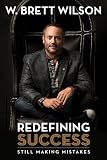
Redefining Success by W. Brett Wilson - Book Review
During the course of my career I have had the privilege of meeting and conversing with some of North America’s leading business people, politicians, actors and philanthropists. I know that I am lucky. So when I received an email last month from W. Brett Wilson’s publicist to write a review on his book, Redefining Success: Still Making Mistakes I was intrigued and said yes. I take these opportunities as ways to learn more about what others are doing in the world, but it is also an opportunity to gain professional insights that you don’t often get W. Brett Wilson exposed to.
Friday, November 16, 2012 - 15:41
Read more
The Power of Consumers to Drive Social Change – CCSR2011
At the Community and Corporate Social Responsibility Conference held in Ottawa earlier this month, I along with Pamela Divinsky from the Divinsky Group, and Stephanie Michele from Social Bling, led a session on how multi-levelled collaboration can drive social change. We picked a very complex social issue – Poverty – and charged participants to think of solutions to the various causes and effects of poverty. The idea was to generate a shared value experience by looking at poverty through a cause and effect lens. By having multiple stakeholders look at the issue – government, private sector and individuals – we could, in essence, develop marketable strategies that could be implemented.
Thursday, December 1, 2011 - 09:42
Read more
My Tickle Trunk - Creating a safe space for ideation...
Yup, you read that correctly, I am exploring an ideation space. I'm calling this space My Tickle Trunk. Thank you Canadian children's show icon - Mr. Dressup!
Tuesday, June 28, 2011 - 15:48
Read more
The Philanthropy Conversation
I recently tweeted some research that we had done by UnCommon Innovation on the state the financial services sector. The focus on the study was on how advisors are talking with their clients about charitable giving. What came out loud and clear is that advisors are looking for tools and resources to have deeper, more meaningful conversations with their clients about philanthropy. These tools and resources can come from a number of places, the most knowledgeable place would be the charitable sector itself.


 This week Place2Give launched the Give to Grow fund in partnership with the Calgary Chamber of Commerce, Calgary Economic Development and the Calgary Public Library Foundation. We took a collective impact approach to this fund focusing on building a strong, literate workforce for the next generation. Our goal is to improve the literacy rate of our youth by 1% by layering four charities addressing literacy in different ways. We have chosen this issue for a number of reasons - Alberta has one of the lowest literacy rates in Canada, the government has under-resourced our education system by $3 to $4Billion compared to similar economies and if we can improve literacy by 1% of the population nationally it could have upwards of an $80Billion economic payoff.
 During the course of my career I have had the privilege of meeting and conversing with some of North America’s leading business people, politicians, actors and philanthropists. I know that I am lucky. So when I received an email last month from W. Brett Wilson’s publicist to write a review on his book, Redefining Success: Still Making Mistakes I was intrigued and said yes. I take these opportunities as ways to learn more about what others are doing in the world, but it is also an opportunity to gain professional insights that you don’t often get W. Brett Wilson exposed to.